Some Things I Said
Some things I said
Never gonna touch me again
Never gonna haunt me again
Some things I did
Never gonna move me again
Never gonna break me again
In place of Casonova
There's a pig in livery
You must look back more clearly
Pull down thy vanity
You'll see things are not the same
As your fantasy
Some things I said
Never gonna touch me again
Never gonna haunt me again
Some things I did
Never gonna move me again
Never gonna break me again
You'll find the world owes you less
If you look clearly
You'll find where the blame should start
It's near me
I'm not the world's best lover
Nor do I need to be
You must look back more clearly
Pull down thy vanity
You'll see things are not the same
As your fantasy
Some things I said
Never gonna touch me again
Never gonna haunt me again
Some things I did
Never gonna move me again
Never gonna break me again
Or so I pretend
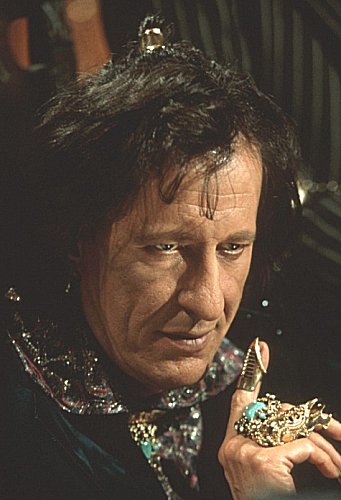
Geoffrey Rush as 'Casonova Frankenstein' from Mystery Men
-----------
Ezra Pound.
From: http://insearchoflosttime.net/2010/01/26/on-ezra-pound/
Turning far ahead to Canto LXXXI is this memorable and powerfully passionate verse:
“What thou lovest well remains,
the rest is dross
What thou lov’st well shall not be reft from thee
What thou lov’st well is thy true heritage
Whose world, or mine or theirs
or is it of none?
First came the seen, then thus the palpable
Elysium, though it were in the halls of hell,
What thou lovest well is thy true heritage
What thou lov’st well shall not be reft from thee
The ant’s a centaur in his dragon world.
Pull down thy vanity, it is not man
Made courage, or made order, or made grace,
Pull down thy vanity, I say pull down.
Learn of the green world what can be thy place
In scaled invention or true artistry,
Pull down thy vanity,
Paquin pull down!
The green casque has outdone your elegance.
“Master thyself, then others shall thee bear”
Pull down thy vanity
Thou art a beaten dog beneath the hail,
A swollen magpie in a fitful sun,
Half black half white
Nor knowst’ou wing from tail
Pull down thy vanity
How mean thy hates
Fostered in falsity,
Pull down thy vanity,
Rathe to destroy, niggard in charity,
Pull down thy vanity,
I say pull down.
But to have done instead of not doing
This is not vanity
To have, with decency, knocked
That a Blunt should open
To have gathered from the air a live tradition
or from a fine old eye the unconquered flame
this is not vanity.
Here error is all in the not done,
all in the diffidence that faltered . . .”
The final verse, Canto 120, was published posthumously. I think of this verse often. Perhaps Pound here admits the errors of his life. Perhaps it is about how all people err. This is the entire Canto 120:
“I have tried to write Paradise
Do not move
let the wind speak
that is paradise
Let the Gods forgive what I
have made
Let those I love try to forgive
what I have made.”